
Aquascaping
Aquascaping is inspiration
What is aquascaping?
Aquascaping is an art form within aquatics in which nature serves as the primary source of inspiration, even more so than in traditional aquarium keeping. The concept was strongly influenced by Takashi Amano and his natural aquarium designs. However, aquascaping does not focus solely on recreating underwater environments. It also draws heavily on landscapes found above water. The term itself reflects this idea, combining the Latin word aqua with the English word landscape, describing the creation of underwater landscapes.
Aquascaping styles
There are various styles of aquascaping, all inspired by natural scenery. Jungle layouts, for example, use roots to recreate the impression of dense forest environments. Another well-known style is the Iwagumi layout, characterised by open, grass-like landscapes with low-growing plants and carefully arranged stones. In this style, an odd number of rocks is typically used, with one dominant main stone to create visual balance.
Other approaches include forest-inspired layouts, detailed compositions featuring a single moss-covered root or tree stump, as well as mountain or canyon landscapes created using stones. Arrangements of driftwood combined with ferns and mosses can evoke the impression of natural decay and regrowth. The possibilities are virtually limitless and allow for a high degree of creativity.
Sources of inspiration
Aquascapers often find inspiration in nature itself, whether during walks, hikes or through observing natural environments. Inspiration can also come from existing aquascapes or documentaries showcasing unique landscapes. These impressions form the basis of a layout idea. The exact replication of a specific scene is not essential. What matters is capturing and conveying the atmosphere.
The aquarium for aquascaping - Scaper's Tank
The Scaper’s Tank by Dennerle has been developed specifically for aquascaping. Compared to the Nano Cube, it offers a larger base area relative to its height, making it easier to create layouts and providing more space for creative design. It is available in sizes such as 35 litres and 55 litres.
There are different versions available. The Nano Scaper’s Tank set includes the aquarium, a cover plate and an insulating base mat. The Scaper’s Tank Basic LED set also includes a suitable filter and a minimalist LED lighting unit that provides sufficient illumination even for demanding plants.
Due to its generous base area, the Scaper’s Tank is also well-suited for keeping shrimp and particularly dwarf crayfish.
Accessories and background
A black background film is available for the Scaper’s Tank. It adheres without glue and is easy to apply. The aquarium should be placed on its front panel on a soft surface, lightly moistened on the outside of the back pane and then covered with the film. A small uncovered strip at the bottom is not visible once the aquarium is set up.
Substrate layout
Active soil is commonly used in aquascaping, as it stores nutrients and softens the water, making nutrients more accessible to plants. Scaper’s Soil by Dennerle has been developed specifically for planted aquariums and eliminates the need for additional substrate fertiliser.
The substrate is often arranged so that it rises towards the back of the aquarium. This creates depth and enhances the sense of space. Steeper slopes can be stabilised using stones and plant roots, which help to hold the substrate in place.
Alternative materials such as sand or natural pebbles can be used to create contrast. Lighter substrates can be arranged to resemble paths or streams, adding visual interest and dynamism.
Hardscape elements
In aquascaping, stones and roots, known as hardscape, form the structural foundation of the layout. Unlike in traditional planted aquariums, where plants dominate, hardscape elements play a central role in defining the composition.
They are often partially covered with mosses or ferns to create a natural appearance and soften transitions. Less stable elements can be supported with stones and integrated into the design using plants.
Plant selection
Plants are essential in aquascaping. In addition to epiphytic species such as ferns, mosses, Anubias and Bucephalandra, foreground plants play a particularly important role. In some styles, such as Iwagumi, they may be the only plants used.
Ground cover plants such as Glossostigma or Hemianthus callitrichoides require strong lighting and sufficient nutrients to grow densely and remain compact. Less demanding alternatives, such as Marsilea, are also suitable and can thrive under moderate lighting.
Plant placement follows a clear structure. Taller plants are positioned in the background, medium-sized plants in the midground and low-growing plants in the foreground. This ensures that the layout remains visible and balanced.
Aquarium technology
Most aquarium plants originate from tropical regions and prefer temperatures between 22 and 25 degrees Celsius. Compact heaters designed for smaller aquariums are available and can be integrated discreetly into the layout.
Hang-on filters
The Nano Corner Filter is not a good fit? That is perfectly understandable. For the Scaper’s Tank, Dennerle therefore offers the Scaper’s Flow, a hang-on filter with an adjustable lily pipe as the outlet. This flower-shaped outlet is not only visually appealing but also creates a gentle and evenly distributed flow throughout the aquarium. Depending on the setting, it can even generate a slight surface movement that helps to remove surface film and fine suspended particles very effectively. For presentation purposes, the filter can simply be removed when taking the final photograph of the aquascape. The filter media is already included with this hang-on filter. It comes with a pre-filter sponge, a fine filter pad and high-performance biological filter material. This ensures both mechanical and biological water purification.
Layout principles
Aquascaping makes use of visual focal points. Plants are arranged in groups rather than randomly, allowing the eye to move naturally through the layout. Repeating similar plant groups in different sizes can enhance harmony.
A prominent stone or root can serve as a focal point
While this is true, it should not be placed directly in the centre. A more harmonious result is achieved by positioning the visual centre slightly to the left or right of the midpoint, following the principle of the golden ratio. This divides the aquarium roughly into a proportion of 2 to 1. In a Scaper’s Tank measuring 45 cm in length, a striking feature such as a solitary plant or a prominent root would therefore be positioned at around 15 cm from either side. In a 40 cm tank, this distance would be approximately 13 cm. Minor variations of a few centimetres are, of course, not critical.
Plant fertilisation
In aquascapes with strong lighting and CO2 supply, plants require a consistent supply of nutrients. Specialised fertilisers such as Scaper’s Green by Dennerle ensure that plants receive adequate nutrition and help to prevent algae growth caused by deficiencies.
Stocking
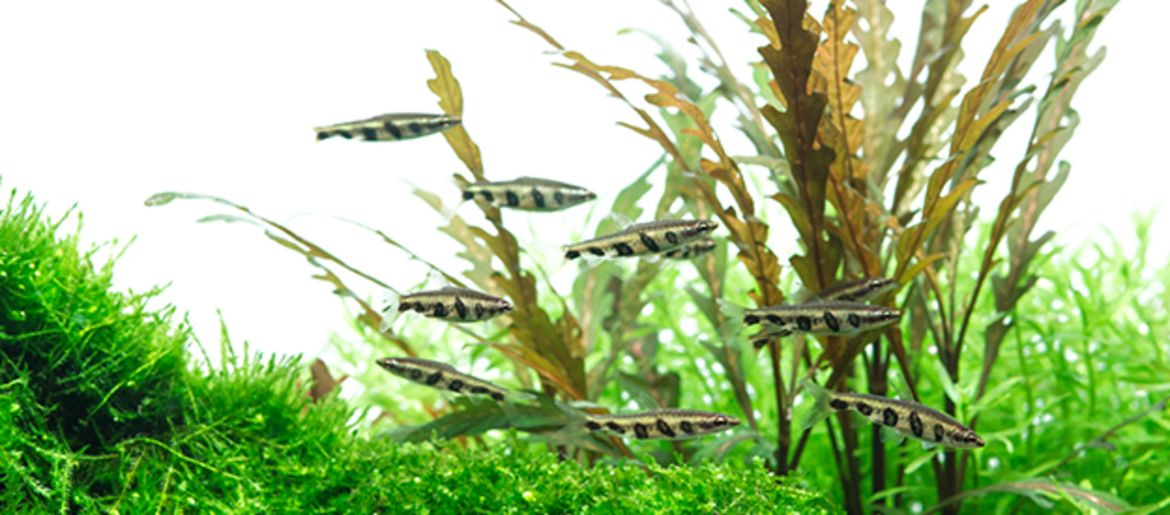
In an aquascape, livestock plays a secondary role. Due to the typically high nutrient levels, dwarf shrimp are not always the best choice without consideration. Bee shrimp and Taiwan shrimp, for example, prefer water that is lower in nutrients. Neocaridina shrimp, such as the popular Red Fire or Red Cherry, are generally a reliable option. In larger aquascapes, it is also possible to keep fish, provided their requirements match the conditions, particularly soft water and moderate temperatures. Aquatic snails can be a useful addition once sufficient biofilm has developed. Species such as nerite snails or horned snails are particularly effective at controlling algae growth.
Maintenance
Aquascapes generally require a little more maintenance than standard aquariums, as plants grow particularly vigorously under optimal conditions. However, regular trimming not only keeps the layout in shape but also encourages dense, bushy growth. Many aquarists even find this routine relaxing.
Daily tasks: If livestock is present, it should be fed and checked for any signs of health issues. Plants should be supplied with a daily fertiliser, and equipment such as the filter and CO2 system should be checked to ensure everything is running smoothly.
Weekly tasks: In heavily fertilised aquariums, a weekly water change of around 50% is recommended. This involves removing approximately half of the aquarium water and replacing it with fresh water. This is also a good opportunity to clean the glass. Even if it appears clean, a thin film will always form over time. Regular cleaning with a tool such as the Nano Alginator by Dennerle helps prevent more stubborn buildup later.
During the water change, plants can be trimmed and any old or yellowing leaves removed. Mosses can be repositioned or retied if necessary, and the substrate can be lightly cleaned using a gravel vacuum. This is particularly useful in areas with lighter sand, where debris is more visible.
Occasional tasks: If the filter flow rate decreases noticeably, the filter media should be rinsed thoroughly under running water to remove accumulated debris and organic matter.
With these simple routines, maintaining an aquascape remains manageable while allowing you to focus on shaping and enjoying your own miniature landscape.
Enjoy bringing your aquascape to life!
Latest reviews
-
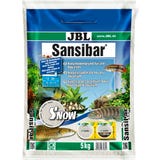
JBL Zanzibar SNOW, 5kg
- Very fine sand for all aquarium types
- Soil with 0.1-0.6 mm grain size
- For fresh and saltwater and terrariums
-

Seachem Flourite Black Sand, 7 kg
- For planted aquariums
- Not chemically treated or coated
- Doesn't need to be replaced
-
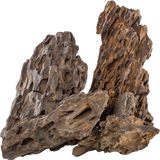
Olibetta Dragon Rocks - 5 KG, 5 kg
- Does not harden the water
- Natural rocks with a fantastic texture
- ideal for planting
Magazine Articles:
Discover Olibetta:
-
Great Britain: Free standard delivery from £69.90
-
Free
returns -
We operate in a
climate-conscious manner. Secure payments
with SSL encryption technology