
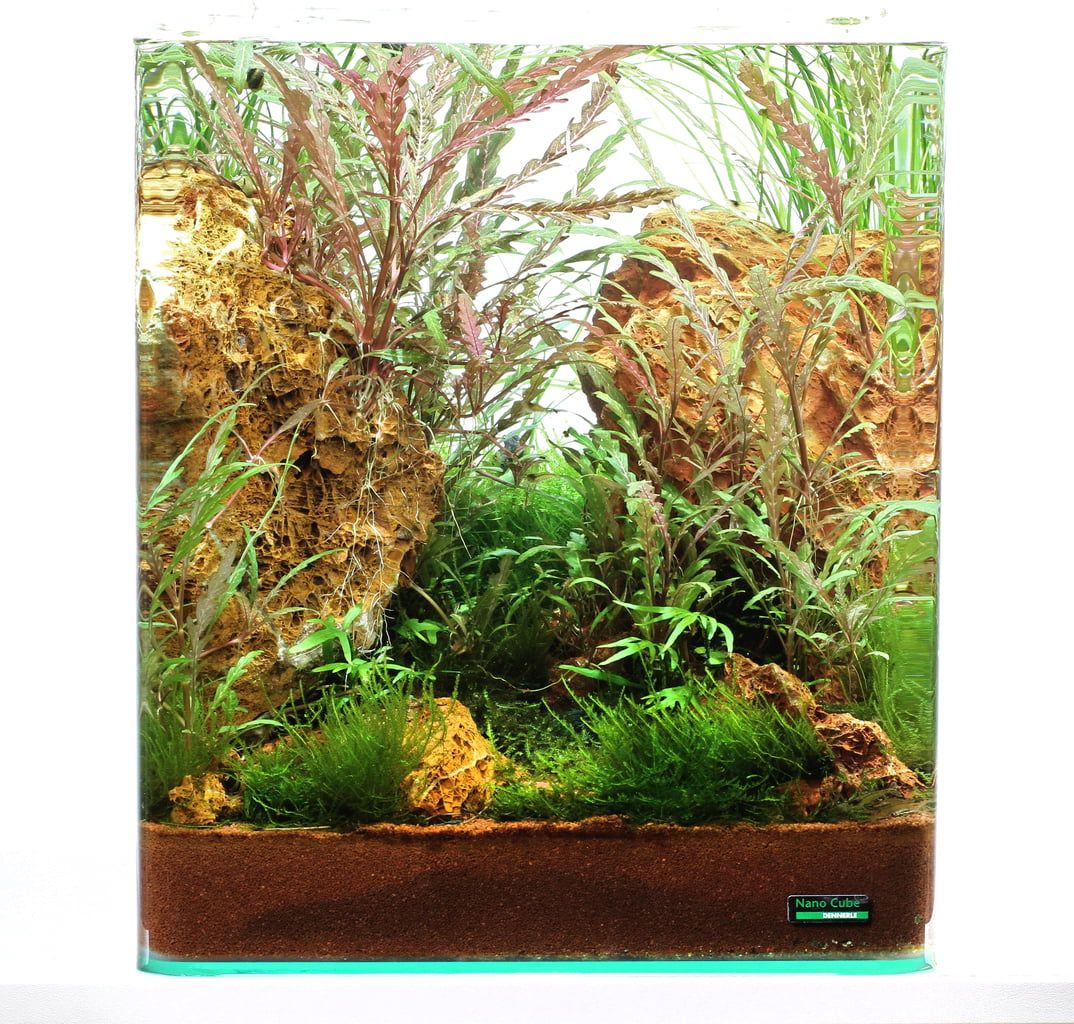
Active Soil
Aquarium substrate for shrimp and tropical fish
Active soil has become an integral part of modern aquatics, particularly in aquascaping and shrimp keeping.
But what exactly is soil?
This aquarium substrate is based on natural earth that is processed and double-fired at low temperatures. It is used in freshwater aquariums and actively influences water parameters, which is why it is referred to as “active” soil. In particular, it reduces carbonate hardness and thereby also affects the pH value. Many popular shrimp species originate from very soft waters, especially streams in southern China. One well-known example is the bee shrimp Caridina logemanni and its related forms, including Taiwan shrimp and numerous selectively bred varieties such as Galaxy Fishbone, Blue Boa, Zeus Bee and Red Devil. Many tropical fish species, including characins, catfish and South American cichlids, also prefer soft water conditions similar to those found in their natural habitats. The majority of aquatic plants cultivated in aquariums likewise thrive in soft, slightly acidic water.
In many regions, tap water is relatively hard, which can make it difficult to keep and breed such species successfully. Plants may also fail to develop optimally under these conditions. The introduction of active soil has therefore significantly advanced the possibilities for soft water aquariums and has had a particularly strong impact on shrimp keeping.
What makes this substrate so effective? How is it produced and what are its limits?
The term “soil” simply means earth. However, aquarium soil is not ordinary garden soil, but a carefully composed mixture of different types of earth with specific properties. These are blended in precise proportions and then processed so that they function effectively in the aquarium. Dennerle offers two variants: Scaper’s Soil for plant aquariums, which is enriched with nutrients, and Shrimp King Active Soil for shrimp aquariums, which is not pre-fertilised. Both types reduce carbonate hardness and help to stabilise pH and overall water quality.
The raw materials used are largely of volcanic origin. Volcanic soils are naturally rich in minerals and highly fertile. Lighter mineral components are combined with darker soils to create the characteristic deep colour. This enhances the visual contrast in the aquarium, allowing both plant colours and brightly coloured shrimp to stand out more vividly.
During production, the soil components are mixed in a specific ratio and formed into the typical rounded granules. Larger particles are removed through sieving. The moisture content is carefully adjusted before the material undergoes a double firing process in specially designed kilns. This step increases stability and prevents the granules from breaking down in water. However, as the firing temperature remains relatively low, the material retains a certain softness and is not comparable to gravel or sand in hardness. After cooling, the granules are sorted, briefly dried and packaged.
In the aquarium, the rounded granules create a well-aerated substrate. This helps to prevent the formation of anaerobic zones and supports healthy root development. Fine plant roots can easily penetrate the relatively soft surface, while nutrients and oxygen remain available.
A key advantage of active soil is its ability to stabilise water parameters. Both Scaper’s Soil and Shrimp King Active Soil function as ion exchangers, binding calcium ions from the water. This softens the water and lowers the pH value. In addition, the soil contains humic substances that help stabilise the pH within a range of approximately 5.5 to 6.5, which is beneficial for many shrimp species and aquatic plants. This buffering effect prevents sudden fluctuations in acidity.
Active soil is not suitable for all aquarium inhabitants. Species that require hard water, such as many African cichlids and most crayfish, should not be kept in aquariums with this substrate, as it can lead to serious health issues. The same applies to plants adapted to hard water conditions.
It is also important to consider that the ion exchange capacity of active soil is limited. If hard tap water is used over time, the soil becomes saturated and gradually loses its effect. This can result in rising water hardness and unstable pH values during water changes. While this may be manageable in plant aquariums, it can be problematic for sensitive shrimp species such as bee shrimp, which may react with health issues or moulting problems.
For this reason, the use of soft, adapted water is recommended in combination with active soil, especially in shrimp aquariums. If tap water is unsuitable, an osmosis system such as the Osmose Compact 130 or 190 by Dennerle can be used. The purified water can then be remineralised with a suitable mineral salt, for example, Shrimp King Bee Salt GH+, to create optimal conditions. This approach also extends the lifespan of the soil.
Decorative materials that release hardness, such as calcareous stones, can also accelerate the saturation of the soil and should therefore be avoided. As a general guideline, active soil should be replaced after approximately two years or when a noticeable rise in pH occurs.
Enjoy your aquarium!
Latest reviews
-
Olibetta Congo Tree on Slate, M
- Beautiful driftwood - real wood!
- For freshwater aquariums and terrariums
- Rich in fibre, important for catfish and invertebrates
-
Seachem Purigen, 100 ml
- Synthetic adsorbent
- Removes harmful compounds
- For freshwater and saltwater aquariums
Magazine Articles:
Discover Olibetta:
-
Great Britain: Free standard delivery from £69.90
-
Free
returns -
We operate in a
climate-conscious manner. Secure payments
with SSL encryption technology